The best choice in a tankless water heater vs tank comparison depends on hot water use, space, fuel, and budget. Tankless units heat water as needed, while tank models store heated water. Both can work well when sized, installed, and maintained by a qualified plumber. For Millbrae properties, the right choice also depends on the home’s pipes, power, venting, and local rules.
A water heater affects comfort, safety, and utility use each day. A failing unit may cause cold showers, leaks, strange sounds, or water damage. The best replacement depends on more than the heater’s size. Family habits, pipe layout, fuel supply, and future plans all matter.
Table of Contents
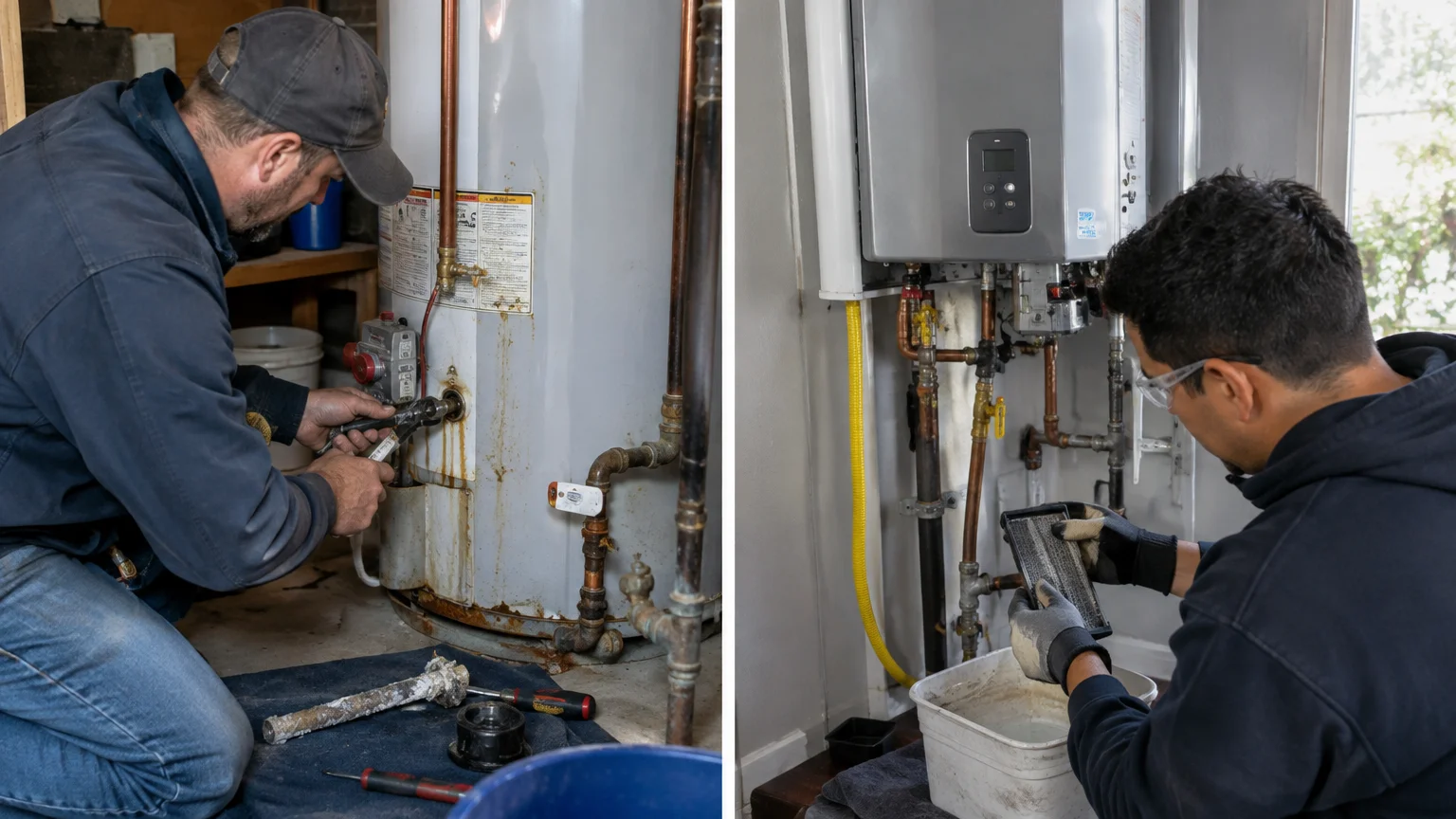
- What Is the Difference Between a Tankless Water Heater and a Tank Water Heater?
- Which Water Heater Provides Better Energy Efficiency?
- How Do Tankless and Tank Water Heaters Compare for Hot Water Capacity?
- What Are the Installation Requirements for Each Type?
- Which Water Heater Has Lower Long-Term Maintenance Needs?
- How Does a Tankless Water Heater Compare With a Tank Over Time?
- Should You Choose a Tankless Water Heater or a Tank?
What Is the Difference Between a Tankless Water Heater and a Tank Water Heater?
A tank water heater stores hot water in an insulated container. A tankless water heater heats water only when a tap or appliance needs it. This simple difference affects space, energy use, water supply, and installation work.
How storage-tank water heaters work
A storage-tank unit uses a burner or electric heating parts to warm water. The tank keeps that water ready for use. Insulation holds in much of the heat, but some heat escapes between uses. This is called standby heat loss.
Tank systems are common in American homes. They are familiar and often simple to replace. A properly sized tank can serve several fixtures at once. When the stored supply runs low, the household must wait while the unit heats more water.
Tank water heaters come in electric, natural gas, and propane models. The right type depends on the home’s fuel supply, available space, water demand, and local rules. A property owner should check these needs before choosing equipment.
How tankless water heaters heat water on demand
A tankless unit has no large storage tank. When someone opens a hot water tap, a sensor starts the burner or heating parts. Water then moves through a heat exchanger. This part transfers heat into the water.
Since the unit does not keep a full tank hot, it can reduce standby heat loss. It also takes less floor space. Still, the unit has output limits. It must be sized for the number of fixtures used together and the temperature of incoming water.
Both systems can fail without proper care. Water Heater Repair may help with leaks, weak heating, odd sounds, or error codes. A professional can explain whether repair makes sense or whether Water Heater Replacement is safer. Millbrae Plumbing helps property owners compare these choices based on actual needs.
Which Water Heater Provides Better Energy Efficiency?
Tankless water heaters often use energy more efficiently because they heat water on demand. A tank unit may use energy to keep stored water hot. Actual results depend on fuel type, household use, unit size, insulation, water temperature, and upkeep.
How standby heat loss affects tank water heaters
A tank heater turns on and off to keep stored water hot. Heat slowly leaves the tank even when no tap is open. This loss is known as standby heat loss. Better insulation can lower it, but cannot remove it fully.
A tank may still suit a home with steady hot water use. It can deliver water quickly because the supply is already heated. Light use lets the supply last longer. Heavy use can leave the tank needing recovery time.
Energy use may rise when sediment builds inside the tank. Sediment is mineral material that settles at the bottom. It can make heating less effective and place more stress on the unit. Regular service can help find this issue early.
What affects the efficiency of a tankless system
A tankless unit avoids most standby heat loss. It turns on only when hot water is needed. Its results depend on flow rate, heating power, water temperature, and incoming water temperature.
The unit may work harder when cold water enters the home. Long showers, repeated laundry loads, and several hot taps can also raise demand. Correct sizing matters more than simply choosing the largest unit.
Homeowners can safely fix dripping taps, use a sensible temperature setting, and keep the service area clear. They should not open gas controls, change wiring, or bypass safety parts. Those jobs need trained help.
In Millbrae, local water and weather conditions may also affect the choice. A plumbing professional can review the home instead of relying only on a product label. That review helps match the heater to real use.
How Do Tankless and Tank Water Heaters Compare for Hot Water Capacity?
A tank water heater offers a set amount of stored hot water. A tankless unit can keep heating water while demand continues, but only within its flow and heating limits. The better choice depends on how many people use hot water and when they use it.
What happens when a household uses hot water at the same time
A storage tank may serve several fixtures until its hot water runs low. A tub, shower, dishwasher, and washing machine can quickly use the stored supply. After that, the unit needs time to heat more water.
A tankless unit may provide a longer supply when demand stays within its rated flow. Too many fixtures can spread available heat across several outlets. Water may become cooler or flow may fall when the unit cannot meet the combined demand.
Households should list their main hot water activities before choosing a system. Note whether showers overlap, a large tub is used, or sinks and equipment run together. This review gives the installer useful facts.
How flow rate and recovery time affect supply
Flow rate describes how much water a heater can heat during use. Temperature rise means the difference between incoming cold water and the desired hot water temperature. Both details affect tankless output.
A tank model is judged by storage size and recovery rate. Recovery rate describes how quickly the unit heats replacement water after the stored supply is used. Gas and electric models may recover at different speeds.
The highest output is not always best. An oversized unit may need extra equipment. An undersized unit may give poor comfort. A qualified plumber can measure demand for a home, rental, or business.
If hot water suddenly stops, an owner can check power, the breaker, and any clear gas appliance message. Do not relight equipment when there is a gas smell. Leave the area and contact the proper emergency service.
What Are the Installation Requirements for Each Type?
Tankless and tank water heaters may need different gas lines, vents, electrical circuits, water connections, and drains. Professional sizing and installation help keep the system safe, reliable, and within local rules.
Space, venting, gas, and electrical considerations
A tank heater needs room for the unit, service access, water lines, and a safe discharge path. It may also need a drain pan or other protection. A leaking tank can release a large amount of water.
Tankless units are smaller, but they are not simple plug-in replacements. Gas models may need larger gas pipes and approved venting. Electric models may need strong circuits and enough panel capacity. These needs should be checked before equipment is chosen.
Venting carries combustion gas away from the building. It must use approved materials and follow the maker’s instructions. A blocked, damaged, or poorly fitted vent can create a serious safety risk.
The location matters as well. Outdoor units need protection from weather and freezing conditions. Indoor units need airflow, drainage, and service access. A professional can also check water pressure and pipe condition.
Why professional sizing and installation matter
Correct installation includes more than connecting water lines. The installer must check capacity, fuel supply, vent design, electrical needs, temperature controls, safety valves, and drainage. The work must follow local codes and the maker’s instructions.
Poor installation can cause leaks, weak heating, unsafe burning, error codes, or early failure. It may also affect an inspection or warranty claim. Professional Water Heater Installation helps lower these risks.
Homeowners can clear the work area, list hot water complaints, and gather information about the old unit. They can ask what care the new system needs. They should not alter gas lines, wiring, vents, or pressure controls themselves.
Millbrae Plumbing serves the main Millbrae area, including Downtown Millbrae and Millbrae Meadows. The company also helps nearby communities such as Burlingame, San Bruno, Hillsborough, and South San Francisco. Local experience can help account for an older property, tight layout, or difficult service access.
Which Water Heater Has Lower Long-Term Maintenance Needs?
Neither system is maintenance-free. Tank heaters need checks for leaks, rust, sediment, valves, and anode condition. Tankless units need filter cleaning, inlet checks, and flushing to remove mineral buildup.
Common maintenance for storage-tank units
A tank system should be checked for rust, moisture, odd sounds, and changes in water temperature. A leaking tank may point to internal rust or a failed connection. Water around the base should never be ignored.
The temperature and pressure relief valve is an important safety part. It releases pressure when conditions become unsafe. It should not be blocked, capped, or removed. A plumber should inspect a valve that leaks or does not work correctly.
An anode rod helps protect the tank from rust. It wears down as it draws corrosive elements from the water. Anode Rod Replacement Water Heater service may help extend tank life when done at the right time.
Some homeowners can safely look for visible leaks and keep the area clear. They should not drain a hot tank without knowing the proper steps. Hot water can burn skin, and a wrong valve action can cause damage.
Tankless system flushing and component checks
Tankless units often need flushing to remove mineral deposits from the heat exchanger. Mineral scale is hard buildup that can limit heat transfer and water flow. Homes with hard water may need closer service.
A technician may inspect inlet filters, water valves, burners, ignition parts, sensors, and vents. The service plan depends on the unit, water quality, fuel type, and maker’s instructions.
A tankless unit may show warning codes for flow, temperature, ignition, or vent problems. The owner can write down the code and check the manual. Do not remove covers or work on gas and electrical parts without proper training.
Routine care can help either system last longer. Repeated repairs, a leaking tank, weak output, or unsafe operation may point to replacement. Emergency Plumbing may be needed when a heater leaks badly or creates a water damage risk.
How Does a Tankless Water Heater Compare With a Tank Over Time?
The long-term choice depends on equipment life, repairs, energy use, maintenance, space, and comfort. A tankless system may use less energy during low-demand periods. A tank may offer a simpler replacement when the existing setup already fits it.
What influences installation and replacement needs
Replacement work is often more involved when the new heater uses a different fuel or design. A tank-to-tank replacement may reuse some connections. The installer must still check vents, valves, drains, and code needs.
Changing from a tank to a tankless system may require new gas piping, venting, electrical work, mounting, or water connections. The property may also need changes to support the unit’s output. These details affect the work plan and final quote.
The final cost is confirmed on a quote after the property and equipment needs are reviewed. It can vary with parts, system size, access, fuel type, venting, water damage, and urgency. Compare the full installation plan, not just the equipment label.
How operating life and energy use affect overall value
A system’s value includes comfort, reliability, energy use, service needs, and the chance of early failure. A tankless system may suit a small space or a home that wants on-demand heating. A tank may be better where stored hot water and simple replacement matter most.
Owners should consider future repairs too. A unit with hard-to-find parts may be harder to service. A common system may be easier for local technicians to repair. The maker’s care instructions and warranty terms also matter.
Keep records of repairs, flushing, valve checks, and replacement parts. These records can reveal repeat problems. They can also help a new owner or tenant understand the system.
Millbrae Plumbing can review the current heater and explain whether repair or replacement fits the property. For customers in Millbrae, local service can help address leaks, weak heating, and urgent heater problems before they cause wider damage.
Should You Choose a Tankless Water Heater or a Tank?
A tankless heater may fit when space is limited, demand changes often, and the property supports the required gas or electrical work. A tank may be more practical when stored hot water, simple replacement, and familiar service matter most.
When a tankless system may be the better fit
Tankless systems can suit homes that want less standby heat loss and more floor space. They may also work well for additions, small utility areas, and properties with careful control of hot water use.
The owner should confirm that the system can meet peak demand. The installer must check incoming water temperature, flow needs, venting, fuel supply, and electrical capacity. Without these checks, comfort may not meet expectations.
A tankless system is not the answer to every low-output problem. A blocked filter, bad sensor, scale buildup, or failed heating part may need repair instead. Testing should come before replacement.
When a conventional tank water heater may be more practical
A tank may suit a household that uses many fixtures together and already has a matching setup. It can also work well when the owner wants a familiar system and a stored hot water supply.
A tank is not automatically old-fashioned or wasteful. A well-sized, insulated unit can serve a home reliably. Regular checks can help limit leaks, sediment, and rust.
The final choice should fit the property, not a one-size-fits-all rule. A plumber can compare the current system, hot water habits, space, fuel, safety needs, and future plans. Contact us to arrange help from Millbrae Plumbing with water heater repair, replacement, or installation.
Key Takeaways
- Tank heaters store hot water, while tankless units heat water on demand.
- Tankless systems can lower standby heat loss but need careful sizing.
- Tank systems can provide strong short-term output from stored hot water.
- Both types need safety checks, maintenance, and proper installation.
- The right choice depends on demand, space, fuel, access, and future plans.
Frequently Asked Questions
Is a tankless water heater better than a tank heater?
Neither option is always better. A tankless model may suit homes that want on-demand heating and less storage space. A tank may suit homes that need stored hot water and a simple replacement. A professional should compare demand, fuel supply, installation needs, and maintenance first.
Can a tankless water heater run out of hot water?
A tankless unit can keep heating water while demand stays within its rated flow and temperature range. It may struggle when many fixtures run together. Poor sizing, cold incoming water, scale, or low flow can also reduce performance. Correct design helps prevent these problems.
Does a tankless water heater need regular maintenance?
Yes. Many tankless systems need flushing to remove mineral scale from the heat exchanger. Filters, sensors, burners, vents, and connections may also need checks. Needs vary by model and water quality. The maker’s instructions and a qualified technician should guide service.
Can a homeowner install a tankless water heater?
A homeowner can gather information, clear the work area, and check for visible leaks. Installation should be handled by a qualified professional because it may involve gas, high electrical loads, vents, water pressure, and local code rules. Incorrect work can cause fire, shock, carbon monoxide, or water damage.
When should a water heater be repaired instead of replaced?
Repair may make sense when the issue involves a replaceable part, loose connection, sensor, valve, or control. Replacement may be wiser when the tank leaks, rust is severe, failures keep returning, or the unit no longer meets demand. A professional inspection can separate a repairable fault from a failing system.
If you are unsure what is wrong, have the system checked before the problem grows. Contact us to speak with Millbrae Plumbing about the next step.