Slow drains in commercial restrooms can signal buildup or a blockage that may grow worse. Staff can take safe first steps, but repeated clogs or several slow fixtures need a plumber to check the cause. Acting early helps businesses keep sinks and toilets working, protect clean shared spaces, and lower the risk of a backup.
A sink that drains slowly may seem like a small issue during a busy day. Yet staff, customers, and tenants all need clean, working restrooms and break rooms. A few simple checks can help a business spot trouble before it interrupts daily work.
Table of Contents
- Why are slow drains in commercial restrooms a serious problem?
- What causes slow drains in commercial restrooms and break rooms?
- What signs suggest a slow drain needs prompt attention?
- What can happen if a business ignores a slow drain?
- What should staff do when a commercial drain slows down?
- When should a business call a commercial plumber?
- How can businesses prevent recurring slow drains?
- Key takeaways
- Frequently Asked Questions
- Conclusion
Why are slow drains in commercial restrooms a serious problem?
Slow drains in commercial restrooms can affect cleanliness, comfort, and daily work. They may also point to a growing clog or a problem farther along the drain line. Acting soon helps keep shared spaces open and may reveal the cause before water backs up.
Restrooms and break rooms serve many people during a workday. When a sink holds water, handwashing becomes harder. A restroom with a bad smell or blocked fixture can leave customers and workers with a poor impression. For property managers, one tenant’s complaint may also signal trouble in nearby units.
A slow drain does not always mean that the plumbing has failed. Hair, soap, food bits, or other waste may be narrowing the pipe. But if water keeps draining more slowly, the blockage may be growing. A drain is the pipe path that carries used water away from a sink, toilet, or other fixture. When part of that path is blocked, water takes longer to pass through.
Drain problems can also involve plumbing vents. A vent is a pipe that lets air move through the plumbing system so wastewater can flow. A blocked drain or vent may cause gurgling, odors, or poor flow. The cause may not be clear from looking at a sink or floor drain.
For offices, shops, and apartment buildings, timely checks help protect shared spaces. Millbrae Plumbing can help business and property owners understand when a slow drain needs a professional check. Commercial plumbing includes the pipes, fixtures, and drain systems used in business and multi-unit buildings. These systems may need a different plan from those in a single home because many people use the same fixtures.
What causes slow drains in commercial restrooms and break rooms?
Slow drains often start when material builds up inside a pipe or blocks the drain opening. In restrooms, common causes include hair, soap, paper, and dirt. In break rooms, food scraps, grease, and drink residue may gather in sink drains.
Restroom sinks collect hair and soap during daily use. Soap can mix with hair and dirt, then stick to the inside of a pipe. Paper towels and wipes can also cause clogs if they are put into a sink or toilet. Items meant for a waste bin should not be flushed or washed down a drain.
Break-room sinks have other risks. Food bits may collect near the drain, while fats and oils can coat the inside of pipes. Grease may be liquid when warm, but it can cool and stick to pipe walls. Over time, this layer can catch more debris and slow the water. A sink strainer can catch food scraps, but grease still needs to go in a suitable waste container.
Some slow drains come from a problem deeper in the plumbing system. A shared branch line carries wastewater from more than one fixture. If this line is partly blocked, several sinks or floor drains may slow at once. A damaged pipe, a poor slope, or a vent issue may also affect how water drains.
Businesses should note when the issue began and which fixtures are affected. If one restroom sink is slow but nearby fixtures work, the clog may be close to that sink. If sinks, toilets, or floor drains in a shared area also have trouble, the cause may be farther down the line. That pattern can help a plumber choose the right check and repair.
What signs suggest a slow drain needs prompt attention?
A drain needs prompt attention when it keeps slowing, clogs again soon after clearing, or affects more than one fixture. Gurgling, bad smells, or water rising from a floor drain may point to a deeper blockage. A backup or leak needs urgent attention.
One slow sink may have a small clog close to the drain opening. But if the problem returns after simple cleaning, debris may still be in the pipe or may keep getting into it. Staff should not treat repeated clogs as normal. A short record of when the problem returns can help show if it is getting worse.
Listen for gurgling as water leaves a sink or toilet. This sound may happen when air cannot move well through the drain system. A foul smell may come from waste caught in a pipe, a dry trap, or another plumbing issue. A trap is the curved pipe under a fixture that holds water and helps keep sewer gas out of the room. Odors that do not go away need a proper check.
Notice how many fixtures have trouble. Several slow sinks in one restroom may share a line. A slow sink and a bubbling toilet in a nearby area may point to a wider problem. In a multi-unit building, reports from tenants on the same floor or in nearby units can help show whether a shared line is affected.
Treat sewage, standing wastewater, or water coming up through a floor drain as urgent. Keep people away from the area and tell the person who manages the property. If there is also a water leak, protect nearby items only if it is safe. Do not use the affected fixtures until someone has checked the cause.
What can happen if a business ignores a slow drain?
Ignoring a slow drain can let a partial blockage turn into a backup. Wastewater may spill onto floors, harm nearby materials, and make a restroom unsafe. The longer the problem lasts, the more likely it is to disrupt workers, tenants, customers, or building care.
Water may still drain at first, which can make the issue seem easy to manage. But continued use can push more waste toward the blockage. If the line becomes fully blocked, sinks or toilets may stop draining. Water may also come back through a nearby fixture or floor drain. What happens depends on the plumbing layout and where the blockage is.
A backup can spread dirty water across a floor. Cleanup may be needed, and flooring, wall trim, stored supplies, or nearby equipment may be affected. A leak under a floor or inside a wall can stay hidden until stains, damp spots, or damage appear. Quick action can help limit how long water spreads, but an inspection is needed to confirm the source.
Poor drainage can also affect cleanliness. People may avoid a restroom with standing water, bad smells, or a fixture that does not work. A business may need to close part of its space during repairs and cleanup. Property managers can keep clear records of reported problems and repairs to track repeat issues across a building.
Commercial drain cleaning may clear some blockages, but the right method depends on the cause and pipe condition. A repeated clog may need more than clearing the nearest drain opening. A plumber can check the system and explain whether the issue is local or part of a shared line. Prompt attention helps a business choose a repair before the problem grows.
What should staff do when a commercial drain slows down?
Staff should stop putting waste into the affected drain, keep the area clear, and tell the person who handles plumbing issues. They can remove visible debris from a drain cover if it is safe. They should avoid harsh chemicals, forceful tools, and repeated flushing that may make the problem worse.
Simple checks and cleaning are often safe when the problem is small and the area is clean. Staff can clear hair or food scraps from a removable strainer. They can wipe the sink and check that a stopper is not stuck. These steps may be enough when water still drains and there are no warning signs, so a professional is not always needed for a minor issue.
Staff should not mix drain cleaners or pour chemicals into a blocked drain. Some products can harm pipes or splash back. Do not push a wire or other tool deep into a drain, as it may damage a pipe or push debris farther down. A plunger may help with a simple fixture clog, but do not use one if chemicals are already in the drain or wastewater is backing up.
Before reporting the problem, staff can note a few useful details:
- Which sink, toilet, or floor drain is slow.
- When the problem began and whether it keeps returning.
- Whether nearby fixtures also drain slowly or make sounds.
- Any odors, leaks, standing water, or recent plumbing work.
- Which simple checks were tried and what happened afterward.
This record helps a plumber understand the issue. In a building with tenants, managers can ask if nearby units have similar trouble. Staff should also mark the area or block access if it may be unsafe. If water is spreading, keep people away and follow the building’s steps for reporting urgent damage.
When should a business call a commercial plumber?
A business should call a plumber when a drain keeps clogging, several fixtures slow down, or water backs up. Urgent help is needed for wastewater spills, leaks, or a drain problem that makes a restroom unsafe to use. A plumber can check the cause and suggest a suitable repair.
A commercial plumber works on plumbing systems in places such as offices, shops, restaurants, and apartment buildings. When looking for commercial plumbing near me, businesses should choose a provider with experience in the building type and drain problem. Property managers can share which fixtures are affected, the building layout, and any past repairs when arranging help.
A plumber may ask when the problem began and whether it affects one fixture or several. They may check the drain opening, trap, and nearby pipe connections. If the blockage seems farther along the line, they may use a camera or other tools to look inside the pipe. The right method depends on access, pipe condition, and what the first checks show.
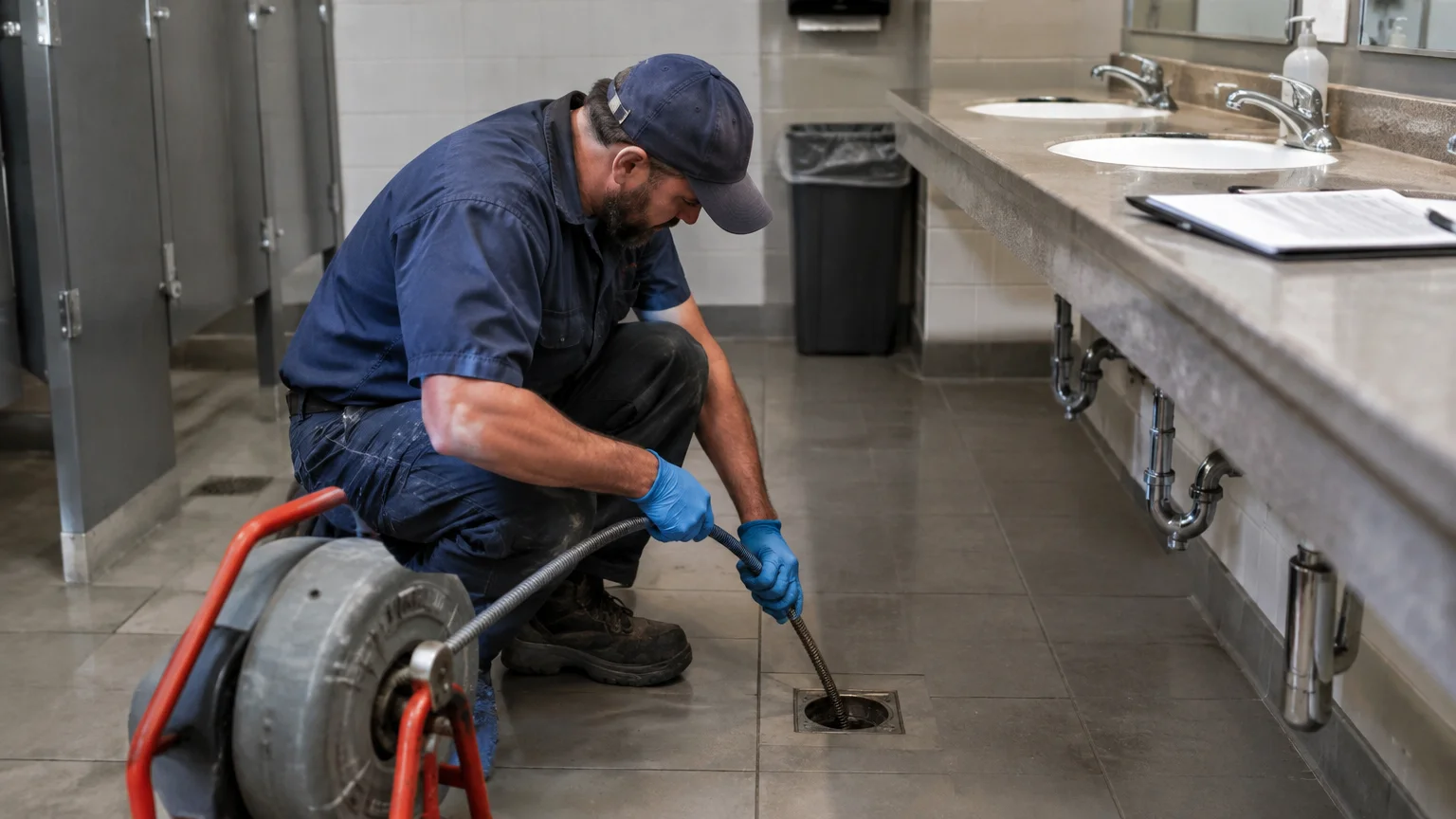
A camera inspection uses a small camera to view the inside of a drain pipe. It can help locate buildup, a blockage, or damage without opening every wall or floor. A plumber may also clear the line with tools made for drain work. The plumber should explain what they find and whether more work is needed.
Some plumbing problems may look alike but need different checks. Low water pressure, a toilet that keeps running, and a slow drain are not the same issue. A slow toilet that flushes poorly may need toilet repair, while a running toilet may need a check of its fill or flush parts. Businesses should describe what is happening instead of guessing at the cause. If there is a gas odor, leave the area and follow emergency safety steps. Do not test for a leak or use plumbing tools.
How can businesses prevent recurring slow drains?
Businesses can lower the chance of repeat drain trouble by keeping waste out of sinks, cleaning strainers, and checking fixtures on a regular schedule. Managers should track repeat problems and arrange professional help when clogs return. Good habits help, but they cannot prevent every pipe or vent issue.
Put clear reminders near sinks about what belongs in a bin, not a drain. Use strainers in break-room sinks to catch food scraps. Put grease and cooking oil in suitable waste containers instead of pouring them down the sink. In restrooms, provide waste bins and keep paper towels and wipes out of toilets. Simple reminders can help staff and visitors use fixtures with care.
A building care plan should name who checks shared restrooms and break rooms. During routine cleaning, staff can look for slow flow, bad smells, leaks, and loose drain covers. Managers can record the date, place, and repair for each issue. Patterns may show that one fixture or shared line needs a closer check.
For multi-unit buildings, property managers can give tenants a clear way to report drain problems. Early reports from nearby units can help reveal an issue in a shared line. Managers should also keep access details and records of past service ready for the plumber. This can help the visit focus on the right part of the system.
Routine professional care may include checking drains, clearing buildup, and reviewing spots with repeat trouble. The right schedule depends on how many people use the building, what goes into the drains, and the system’s condition. Millbrae Plumbing can help businesses consider drain care as part of their commercial plumbing needs. For managed properties across the area, from Downtown Millbrae and Millbrae Meadows to nearby communities, a written plan can help staff spot patterns and respond clearly.
Key takeaways
- Slow drains can warn of buildup or trouble in a shared line.
- Hair, soap, food, and grease can narrow pipes over time.
- Several slow fixtures, backups, odors, and repeat clogs need attention.
- Staff can remove visible debris but should avoid harsh chemicals and deep tools.
- Routine checks and clear reports can help businesses catch problems sooner.
Frequently Asked Questions
Can staff safely clear a slow commercial sink?
Staff can remove visible debris from a strainer and clean the sink area when it is safe. They should not mix chemicals, push tools deep into pipes, or keep using a fixture that backs up. If the drain stays slow or the problem returns, tell the building manager and arrange a plumbing check.
Why do several drains slow down at the same time?
Several slow fixtures may share a branch line or connect to a larger drain. A blockage in that shared path can affect more than one sink or restroom. Note which fixtures are affected and where they are. A plumber can check whether the issue is local or shared.
Are drain odors a sign of a serious plumbing problem?
A bad smell may come from waste or buildup in a drain, but there can be other causes. A dry trap or vent problem can also let odors into a room. If the smell remains after basic cleaning, or comes with gurgling or slow flow, have the drain checked.
What should a business do if a restroom drain backs up?
Stop using the affected fixtures and keep people away from wastewater. Tell the building manager and arrange urgent plumbing help. Do not pour chemicals into standing water or try to force the blockage through. If water is spreading, follow the building’s safety steps and protect nearby items only when it is safe.
How can break-room sinks stay clear?
Use a strainer to catch food scraps, and put grease and oil in a waste container. Wipe plates and pans before washing them, and do not pour food residue into the sink. Staff should report slow flow early. These habits help, but repeat clogs still need a plumber to find the cause.
Conclusion
Slow drains can begin with simple buildup, but repeat trouble may point to a shared line or another plumbing issue. Staff can take safe first steps, while managers track symptoms and keep affected fixtures out of use when needed. Regular care helps protect restrooms, break rooms, and daily building use.
Contact us to discuss slow drains or commercial plumbing support for your property.