Hydro jetting commercial drains may be worth considering when grease, scale, or other buildup keeps causing clogs. A plumber uses controlled, high-pressure water to clean suitable pipes. First, the plumber checks the drain and pipe condition. That check helps show whether jetting is safe or another repair is needed.
Table of Contents
- What Is Hydro Jetting for Commercial Drains?
- What Commercial Drain Problems Can Hydro Jetting Solve?
- When Is Hydro Jetting Worth It for a Business?
- How Does a Plumber Decide Whether Hydro Jetting Is Safe?
- What Happens During Commercial Hydro Jetting?
- How Does Hydro Jetting Compare With Other Drain-Cleaning Options?
- How Can Businesses Prevent Future Drain and Sewer Blockages?
- Frequently Asked Questions
- Key Takeaways
- Conclusion
What Is Hydro Jetting for Commercial Drains?
Hydro jetting sends water through a drain using a hose and nozzle. The water pressure can loosen buildup on the pipe walls and move debris along the line. A trained plumber controls the equipment and picks a method that fits the pipe and blockage.
How does high-pressure water clear buildup?
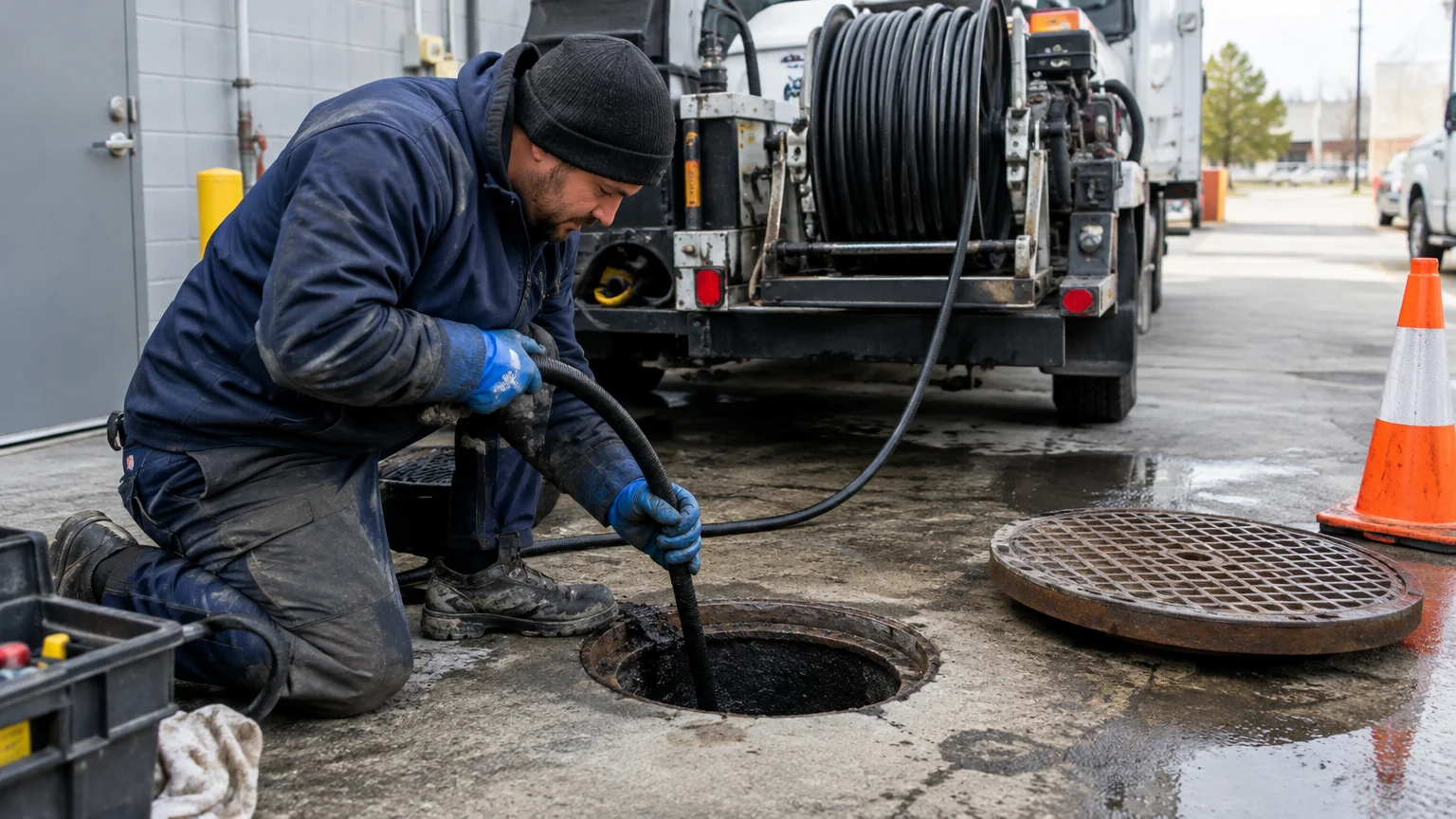
A hydro jetter is a machine that pumps water through a hose. A special nozzle sends water forward and back. This can break up material and wash it toward an open drain. A plumber may use this tool on suitable building drains or sewer lines after checking them.
Hydro jetting drain cleaning may clear material that a basic pass through the pipe leaves behind. It can help remove grease, soap residue, sediment, and other buildup. The result depends on what caused the clog and the pipe’s condition. It also depends on whether the loosened material can safely move through the line.
How is hydro jetting different from drain snaking?
A drain snake uses a bendable cable to reach and break through a clog. It can help with one blockage or an obstruction near an access point. Hydro jetting uses water instead. In a suitable line, it can clean more of the pipe’s inside surface.
Neither method fits every drain problem. A plumber may use a camera to see where the clog is and what it contains. Then the plumber can choose a safer tool. Millbrae Plumbing can explain these options to commercial property owners. The best choice depends on the pipe, not only the clog’s size.
What Commercial Drain Problems Can Hydro Jetting Solve?
Hydro jetting may help with clogs caused by grease, scale, sediment, and other buildup in suitable pipes. A plumber may consider it for repeat drain trouble in kitchens, restrooms, and some main sewer lines. The plumber should check the cause before choosing how to clean the drain.
Can jetting clear grease, scale, and recurring clogs?
Grease can stick to pipe walls and catch food scraps. Soap residue and sediment can build up there too. Mineral scale is a hard layer that forms inside some pipes. As buildup narrows a drain, water may move slowly or stop flowing.
Hydro jetting drain cleaning may remove these deposits when the line is in good shape. But a clog may also come from a broken pipe, a root, or an object that should not be pushed farther down. Clearing the blockage without finding its cause can lead to another backup. A plumber can check whether cleaning is likely to address the problem.
Which parts of a commercial property may need attention?
Commercial kitchens may send cooking grease, food scraps, and cleaning residue into drains. Restrooms may clog when people flush paper products or other items that should not go down the toilet. Shared and main sewer lines carry waste from many fixtures, so one blockage can affect several areas.
The signs can help a plumber find the source. One slow sink may point to a nearby clog. Several slow drains, gurgling sounds, or backups at once may point to a larger line problem. If wastewater is rising or spreading, stop using affected fixtures and arrange prompt help. This may be an emergency plumbing issue if the backup is affecting people or business use.
When Is Hydro Jetting Worth It for a Business?
Hydro jetting may be worth considering when clogs return, several drains slow down, or grease keeps getting in the way of daily work. It may also suit planned cleaning when a plumber finds buildup in a sound pipe. The plumber should weigh the blockage, pipe condition, and effect on business tasks.
When do recurring clogs point to a larger issue?
A clog that keeps coming back may mean buildup remains on the pipe walls. It may also mean the first clearing did not reach the source. Several slow drains can point to a shared branch or main line issue. A sewer backup, bad smell, or water coming up through a floor drain needs prompt attention.
These signs do not prove that hydro jetting is the right answer. A camera check or other test can show whether the line has buildup, damage, or an object in the way. That information helps the plumber suggest drain cleaning, a focused repair, or another useful step. It can help a business avoid repeating work that does not address the cause.
Can planned cleaning reduce business disruption?
Some businesses plan drain checks around how they use their building. A kitchen that prepares a lot of food may need a different plan from a lightly used office. A plumber can review the property’s drain history and help suggest a sensible plan. This is better than guessing that every building needs the same service.
Planning work around opening hours may reduce disruption. The best time still depends on access and the pipe’s condition. Keep notes about repeat clogs, backup spots, and changes in how drains work. Millbrae Plumbing can talk with businesses about drain concerns and possible next steps. A plan should fit the building, not just follow a set routine.
How Does a Plumber Decide Whether Hydro Jetting Is Safe?
A plumber checks the drain before using high-pressure water. This may mean asking about past problems, finding an access point, and looking inside the pipe. If the pipe is damaged or weak, the plumber may suggest a gentler method or a repair instead.
Why inspect the drain and pipe first?
A drain camera is a small camera on a bendable cable. It lets a plumber look inside a pipe and check for buildup, cracks, shifts, or other trouble. This view helps show whether the pipe may handle jetting and where the problem sits.
The plumber may also check the pipe material, its age if known, and its repair history. A slow drain alone does not show the full problem. A careful check can help avoid directing water pressure at a weak spot. It also helps the business understand what is causing the clog and what work may help.
When might another approach be safer?
Old, cracked, rusty, or weak pipes may not suit high-pressure cleaning. A pipe that has shifted or fallen in needs more than a wash. The plumber may suggest a camera check, mechanical clearing, a small repair, or pipe replacement. The right choice depends on what the inspection shows.
A business owner can ask what the plumber found and why the suggested method fits. It is fair to ask whether the line needs cleaning, repair, or another check. If wastewater enters an area used by staff or customers, keep people away from that space while arranging professional help. Do not keep using fixtures that add water to a backed-up line.
What Happens During Commercial Hydro Jetting?
A plumber usually finds the affected line, checks access, and picks tools for the pipe and clog. The plumber then guides the hose through the line and checks whether water flows better. The steps can vary with the building, clog location, and inspection results.
How do inspection and access guide the work?
The plumber first asks about the symptoms and looks for a good cleanout or access point. A cleanout is an opening that gives access to a drain or sewer line. The plumber may use a camera before cleaning, especially when the pipe’s condition is unclear or the clog keeps returning.
The hose, nozzle, and water pressure should suit the job. These choices depend on the pipe’s size, material, and condition. The plumber should also think about nearby fixtures and how people will use the building during the work. Clear planning helps the business know which areas may need to stay closed.
How is cleaning checked afterward?
During cleaning, the plumber feeds the hose into the line to loosen and remove buildup. Afterward, the plumber may test the water flow or look inside the pipe again. Better flow is a useful sign. It does not show that a damaged pipe has been fixed or that clogs can never return.
The business should ask what the plumber found, what was cleared, and whether more work is needed. If the same signs come back, report them and share notes from earlier visits. Keep a record of affected fixtures and past work. This can help a plumber spot a pattern and give better advice next time.
How Does Hydro Jetting Compare With Other Drain-Cleaning Options?
Hydro jetting uses water to clean, while a drain snake uses a cable to break through or remove a clog. A plumber may choose either method after checking the blockage and pipe. If the line is cracked, collapsed, or damaged in another way, drain repair may help more than cleaning alone.
When is a snake the better choice?
A mechanical snake can work well for a local clog, such as material caught near a sink or toilet. It may open the drain without cleaning the full inside wall. A plumber can choose a cable and tool that fit the fixture and blockage.
Hydro jetting may suit buildup along a pipe or a line that clogs again and again. It is not always stronger or better for every job. The plumber should explain why the chosen method fits the problem. The plumber should also explain what signs might mean another step is needed.
When does a drain need repair instead?
Cleaning loosens or removes material inside a pipe. It cannot mend a crack, fix a poor connection, or replace a collapsed section. If a camera shows damage, the plumber may suggest repair or replacement instead of more cleaning.
When comparing options, focus on the cause and the result the work should provide. Ask whether the plan addresses the problem or only restores flow for now. Drain Cleaning may help with buildup and clogs. Sewer line repair may be needed when the pipe itself is damaged. The inspection can help separate these problems.
How Can Businesses Prevent Future Drain and Sewer Blockages?
Good daily habits can reduce the grease, scraps, and waste that enter commercial drains. Regular checks can also catch slow flow before it turns into a backup. Each business can set rules that fit its fixtures, kitchen needs, and history of drain problems.
What daily habits help protect drains?
Staff can follow clear rules for sinks, floor drains, and toilets. Simple steps can help prevent common clogs:
- Keep food scraps, coffee grounds, and solid waste out of sinks.
- Put cooking grease in a suitable container instead of pouring it into a drain.
- Use drain strainers where they fit, and clean them often.
- Do not flush wipes, paper towels, or items that do not break down like toilet paper.
- Report slow drains, gurgling, and sewer smells before the problem spreads.
A grease trap is a device that catches fats, oils, and grease before wastewater enters the sewer line. Food businesses should keep it clean and follow a care plan that suits their system. Staff training matters too. A clear routine can help stop repeat drain misuse and keep waste out of pipes.
How should a business plan inspections and cleaning?
A plumber can help a property owner review past clogs, building use, and drain layout. These details can guide checks and planned upkeep. No one schedule fits every business. The plan should match the building and change when drain problems change. This applies to businesses in Millbrae, too.
Keep service notes in one place. Include which fixtures had trouble and what work was done. Make sure staff know who should report a backup and which areas must stay clear. Millbrae Plumbing can help businesses understand drain concerns and consider suitable upkeep or repair options.
Frequently Asked Questions
Is hydro jetting safe for every commercial drain?
No. Hydro jetting does not suit every pipe. A plumber should check the line’s condition, material, and access before using high-pressure water. Cracked, collapsed, or weak pipes may need another cleaning method or a repair. An inspection helps guide the choice and lower the chance of making damage worse.
Can hydro jetting remove grease from a commercial kitchen drain?
It may remove grease and related buildup from a suitable pipe. First, the plumber should check how far the clog reaches and whether the pipe is sound. Good grease handling and care of the building’s grease trap can also help reduce repeat clogs.
Is hydro jetting better than snaking a drain?
Neither method is best for every clog. Snaking can help with a local blockage, while hydro jetting may clean buildup along a suitable pipe. The right choice depends on the cause, location, and pipe condition. A plumber can explain why one method fits the inspection better.
How can a business tell if a main sewer line is blocked?
Several slow drains, gurgling fixtures, sewer smells, or wastewater coming up through a floor drain may point to a shared line problem. Other issues can cause similar signs, so a plumber should check the system. Stop using affected fixtures if wastewater backs up into the building.
Can a business prevent commercial drain clogs?
Businesses can lower the risk by keeping grease, food scraps, and unsuitable waste out of drains. Staff should report slow flow and odd sounds early. Regular checks may find problems before a backup. The right upkeep plan depends on the building, how people use it, and its drain history.
Key Takeaways
- Hydro jetting uses controlled water pressure to clean suitable pipes.
- A plumber should check pipe condition before choosing this method.
- Repeat clogs may need an inspection to find their cause.
- Damaged pipes may need repair instead of more cleaning.
- Grease control and clear staff rules can help prevent blockages.
Conclusion
Hydro jetting can help clear grease and buildup from some commercial drains. It is not right for every pipe. A plumber should inspect the line, explain the cause, and compare cleaning with repair when needed. Good daily habits and clear service notes can also help Millbrae businesses manage drain problems.
Contact us to discuss commercial drain cleaning or a repeat blockage with Millbrae Plumbing.