Plumbers detect water leaks by checking water use, testing sections of the plumbing, and looking for signs of moisture or escaping water. Knowing how plumbers detect water leaks helps Millbrae property owners understand what an inspection may involve. The right test depends on the pipe, the building, and the signs that first raised concern.
A hidden leak can cause damage before water appears in plain view. In Millbrae, homeowners and business owners can take safe steps to limit harm while a plumber checks the cause. Millbrae Plumbing can explain what the signs may mean and what tests may help find the source.
Table of Contents
- What are the signs of a hidden water leak?
- How do plumbers confirm that a leak is present?
- How do plumbers pinpoint a leak without opening walls?
- How do plumbers detect leaks in different pipe systems?
- What happens during a professional leak detection inspection?
- How accurate are water leak detection methods?
- Can a homeowner find a hidden water leak?
- When is a hidden water leak an emergency?
- What happens after a plumber locates the leak?
- How can homeowners reduce the risk of future hidden leaks?
What are the signs of a hidden water leak?
A hidden leak can cause a change in water use, damp spots, or weak water pressure. It may also leave a growing stain or a musty smell in a room. One sign does not always mean there is a leak, but several signs together should be checked.
Which changes in water use or pressure can signal a leak?
A water meter may move when all taps and water-using machines are off. This can mean water is flowing somewhere in the plumbing. First, check that no one is using a toilet, washing machine, dishwasher, ice maker, or outdoor hose. A toilet that keeps filling can also use water without leaving a puddle.
Low water pressure can have more than one cause. A leak is one possible cause, but a valve may be partly closed. A fixture could also be blocked, or the water supply may have a problem. If pressure drops throughout the home, note when it began and whether it affects hot water, cold water, or both. That detail may help the plumber find the cause.
What property damage should homeowners watch for?
Watch for peeling paint, flooring that bends or lifts, soft drywall, bubbling surfaces, and marks that return after cleaning. A wet spot on a wall or ceiling may be far from the leak. Water can travel along pipes, wood frames, and other surfaces before it shows. A musty smell can mean that part of the building stays damp.
In Millbrae, check beneath sinks, around toilets, near water heaters, and beside pipes you can see. Do not touch wet electrical items, and do not step into water near outlets. Take photos of new marks and write down when you first saw them. These notes can help show whether the damage is spreading and where a plumber may start looking.
How do plumbers confirm that a leak is present?
Plumbers check whether water is moving when it should not be, then test parts of the plumbing system. They also look for damp areas and rule out common causes, such as a toilet that keeps running. The right checks depend on the building and the suspected pipe.
How do meter readings and isolation tests help?
A water meter tracks water entering a property. A plumber may record the reading, stop water use, and check the meter again later. If the reading changes while all known water use has stopped, water may still be moving through the pipes. Before calling it a leak, the plumber checks whether a device or fixture could explain that use.
An isolation test checks one part of the plumbing at a time. A plumber may close a valve to separate a fixture or pipe branch. Then the plumber checks whether signs of water flow change. This can show which part needs a closer look. It is more than turning off a tap, because the test compares how separate parts of the system act.
How can a plumber rule out running fixtures or appliances?
Before testing, a plumber may ask everyone to pause water use. Toilets, water heaters, washing machines, dishwashers, humidifiers, and fridge ice makers may use water when no one is nearby. A worn toilet flapper, for example, may let water pass into the bowl without making a large puddle.
The plumber can check these items, inspect shutoff valves, and repeat a meter check after ruling them out. This helps avoid blaming a hidden pipe too soon. It can also show that a fixture needs repair instead. Millbrae Plumbing can help property owners understand which details to share before an inspection starts.
How do plumbers pinpoint a leak without opening walls?
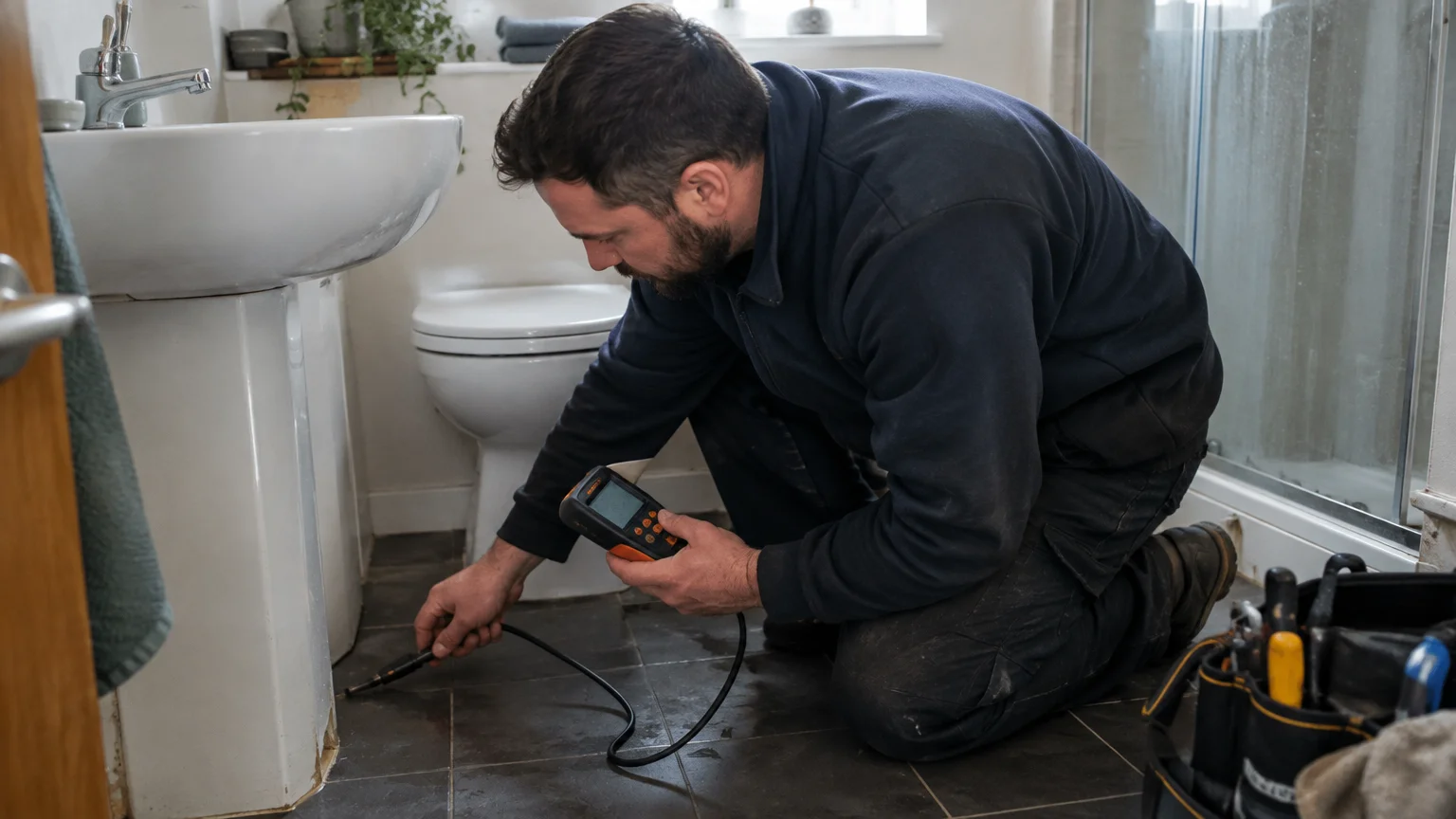
Plumbers may narrow down a leak without opening a wall by using listening tools, moisture meters, and thermal cameras. These tools look for different clues and do not all detect water in the same way. A plumber compares their results with the pipe layout and other test findings.
How do acoustic listening devices locate escaping water?
Acoustic listening devices help plumbers hear sounds made by water escaping from a pipe under pressure. The plumber may listen at exposed pipes, valves, floors, or other spots near the suspected leak. If the sound grows stronger in one area, it may help narrow the search.
Noise from heating systems, traffic, appliances, or nearby pipes can affect what the tool hears. Listening by itself may not show the exact leak point. The plumber may compare sounds at several spots and use other checks to confirm the likely area. This method can help when pipes sit behind a wall, under a floor, or below soil.
When are thermal cameras or moisture meters useful?
A thermal camera shows patterns in surface temperature. Wet materials may look warmer or cooler than dry areas, depending on the conditions. The camera cannot see through a wall or prove that a pipe leaks. It can point out areas that may need more checks.
A moisture meter checks how much moisture is in a material. A plumber may compare readings across a wall or floor to map a damp area. The reading may show how far water has spread, but not where it first escaped. These tools guide the inspection; they do not replace professional judgment. A plumber may use them with meter checks or listening tests before suggesting that a surface be opened.
How do plumbers detect leaks in different pipe systems?
Leak detection depends on whether the water is in a supply line or a drain pipe. Supply lines carry clean water to fixtures under pressure. Drain pipes carry used water away from the building. Because these pipes do different jobs, they show different signs and need different tests.
How is leak detection different for supply lines and drain pipes?
A leak in a supply line may keep releasing water when no fixture is in use. A plumber may check the meter, separate parts of the system, and listen for water escaping under pressure. Signs can include a wet floor, damp wall, or changes in pressure at fixtures.
A drain leak may show up only when a sink, tub, toilet, or appliance drains. A plumber may run water through the fixture while checking an exposed pipe or nearby surface for dampness. If a blockage seems more likely than a leak, a drain camera may help show the inside of an accessible line. A camera check is not the same as testing a supply pipe under pressure.
What changes when pipes are under a slab or behind a wall?
A slab is a concrete floor or foundation. Pipes under a slab or behind a finished wall can be hard to reach. The plumber may need to gather several clues before choosing where to look. Meter readings, sounds, damp areas, pipe plans, and the building layout can all help narrow the search.
A warm or damp floor does not prove that a pipe below it is leaking. Heating systems, condensation, and other sources can create similar signs. A plumber may test nearby fixtures and compare more than one area. Careful checks can help limit needless damage to a floor, wall, or concrete, though opening part of the surface may still be needed to reach the pipe safely.
What happens during a professional leak detection inspection?
A leak detection inspection often starts with questions and a visual check. The plumber then chooses tests that fit the signs and the building. The goal is to check how the plumbing acts, find useful clues, and narrow down the likely source. The steps can differ in a small home and a larger property.
What information and access should a homeowner provide?
Tell the plumber when the problem began, what changed, and which areas seem affected. Mention recent plumbing work, changes in water pressure, wet spots, odd sounds, or a water heater leak. Photos can help show how a stain or damp area changed over time.
Clear access to the water meter, shutoff valves, sinks, toilets, water heaters, and visible pipes can help the visit go smoothly. Keep children and pets away from wet or tested areas. If a tenant spots a leak, they should tell the property owner or manager soon and follow the building’s emergency plan. Do not remove walls or flooring to search for a pipe.
How do plumbers narrow down the leak location?
The plumber may begin with visible fixtures and pipe sections, then test different parts of the system. A meter check can show that water is moving. An isolation test may help show which pipe branch is involved. Listening and moisture tools can then help focus on a smaller area.
Each result is a clue, but may not give the full answer on its own. The plumber may repeat a test after shutting off a fixture or separating a pipe section. Once the likely area is clear, the plumber can explain what access may be needed to confirm and fix the issue. Ask which signs support the finding and what the next step includes.
How accurate are water leak detection methods?
Leak detection tools can be useful, but no single tool gives an exact answer in every building. Results depend on the pipe, the leak, nearby noise, building materials, and how much of the system can be tested. Using more than one method may give the plumber a clearer view.
What factors affect the accuracy of leak detection?
A small leak may make less sound or leave fewer signs of moisture than a larger leak. Pipes under concrete, behind thick walls, or near noisy systems can be harder to check. Water may also travel along a floor or wood frame, so the wettest spot may not be right above the leak.
Access to valves, meters, and exposed pipes also matters. Past repairs or changes can make the pipe layout less clear. A thermal camera may show a temperature pattern, while a moisture meter may find damp material. Neither tool proves on its own that a pipe caused the wet area. A careful check considers these limits instead of treating one reading as certain.
Why might more than one test be needed?
Different tests answer different questions. A meter check may suggest that water is moving, while an isolation test may help point to one section. A listening tool may narrow the area, and a moisture check may show where water reached a surface.
When several results agree, the plumber may have stronger clues about the leak’s location. If results differ, another test may help rule out a fixture, condensation, or another source of moisture. This careful process can reduce guesswork and help avoid opening the wrong area. Ask the plumber to explain each test in plain words before repair work starts.
Can a homeowner find a hidden water leak?
A homeowner can look for common signs and do simple, safe checks, but should not cut into walls or test gas lines. A meter check, a look beneath sinks, and a toilet dye test can offer useful clues. A licensed plumber should check uncertain leaks and signs of serious damage.
Which simple checks are safe to do before calling a plumber?
Try these basic checks only when the area is safe and dry:
- Turn off taps and pause water-using appliances, then see whether the water meter still moves.
- Look under sinks and around toilets for damp spots, loose parts, or water marks.
- Put food coloring in a toilet tank and wait without flushing; color in the bowl may point to a tank leak.
- Check visible pipes and the water heater for drips, rust, or wet flooring.
- Note changes in pressure, sounds, smells, and when a damp area appears.
These checks cannot find every leak or prove that a pipe is damaged. A meter can also move because of a device that was missed. Keep notes and share them with the plumber. Do not touch water near electrical equipment, enter tight spaces, or move heavy appliances to reach pipes.
When should testing stop and professional help begin?
Stop checking if water is near outlets, a ceiling is sagging, the floor feels soft, or the leak is growing. Do not break walls, floors, or concrete to search for pipes. Do not adjust a gas line or try to fix a water heater that may have an electrical or gas problem.
If a water heater leaks from the bottom, the cause may be a drain valve, pipe connection, or the tank itself. A plumber can check the source and decide whether it is safe to repair. Water heater repair or water heater replacement may be needed, depending on the unit’s condition. If you smell gas near a water heater, leave without using switches or flames. Contact emergency services or the gas utility from a safe place.
When is a hidden water leak an emergency?
A hidden leak is an emergency when it causes fast flooding, puts people near electrical danger, weakens a ceiling or floor, or cuts off needed water. A burst pipe, sewage backup, or water heater failure with an active leak may also need urgent help. Acting quickly can help limit damage.
Which leak signs require immediate action?
A pipe that sprays or releases a steady flow needs urgent attention. So does water spreading across floors or a ceiling that starts to bulge. Sewage smells or waste coming back through a drain may create a health risk. Water near outlets, electrical panels, or plugged-in appliances can cause shock or fire.
A sudden drop in pressure can have several causes. It needs prompt attention when it comes with wet walls, a moving meter, or visible damage. If a pipe bursts, close the main water valve if it is safe to reach. Do not enter a flooded area where electrical equipment may still be live. Call emergency services if anyone is in immediate danger.
What should occupants do to limit water damage?
Move people and pets away from wet areas, especially near power sources. If the main shutoff is safe to reach, close it. Do not touch electrical devices or switches in a wet room. If a fixture appears to be the source, close its shutoff valve only when you can reach it safely.
Move belongings out of the water when safe, and take photos from a dry place. Do not use a home vacuum to remove water near electrical hazards. If you smell gas, leave the building and avoid anything that may create a spark. Seek emergency help from a safe location.
What happens after a plumber locates the leak?
After finding the likely leak area, the plumber explains the signs and possible repairs. The work may involve a fitting, a short pipe section, a fixture, or a larger part of the plumbing system. The right repair depends on pipe condition, access, and what caused the leak.
How do plumbers determine the appropriate repair?
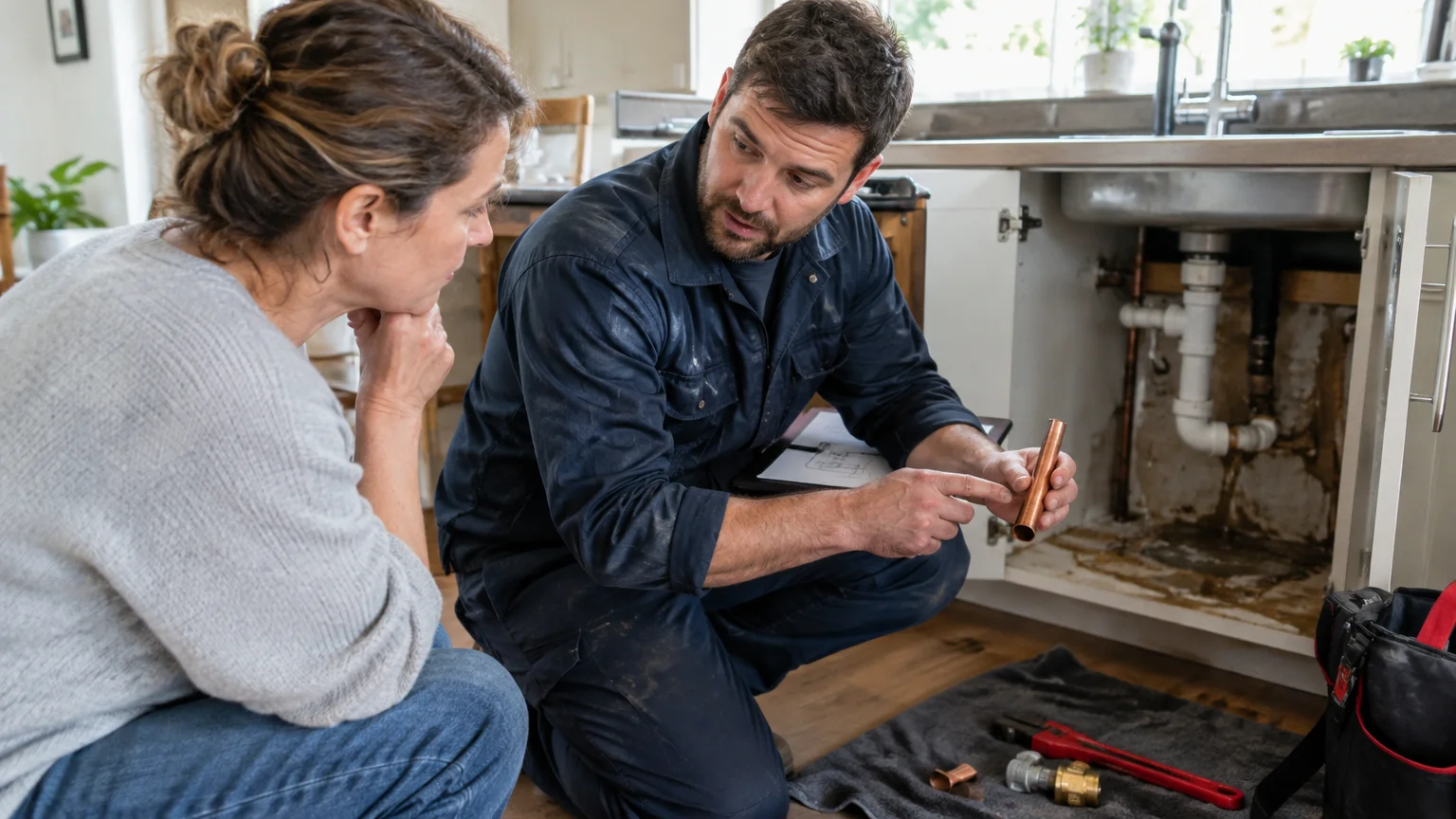
A plumber checks the pipe material, the leak’s size and place, and whether nearby parts show wear. A loose joint needs a different repair from a split pipe or a failed water heater tank. If damage keeps happening, the plumber may check for a wider cause, such as rust or movement that puts strain on a pipe.
The plumber should explain what needs to be shut off, how the repair will be tested, and whether a wall or floor must be opened. Emergency Plumbing may be relevant for urgent leaks and pipe damage. Water Heater Repair may help when a leak or failure involves a hot water unit. A clear explanation helps the property owner know what work is planned.
What restoration work may be needed after the plumbing repair?
Stopping the leak does not always dry the building. Wet drywall, insulation, flooring, or cabinets may need to be dried or repaired. The work depends on how long water spread, which materials got wet, and whether the area can dry fully.
A plumber can explain which building parts were opened or affected, but other trained workers may handle restoration. Keep notes and photos of the damage and repair. Follow guidance from the property owner or insurer when it applies. Do not cover damp materials with paint or new flooring before they dry. Covering them may hide moisture and let damage continue.
How can homeowners reduce the risk of future hidden leaks?
Regular checks can help homeowners spot changes before they cause more damage. Look at visible pipes, fixtures, and appliance connections from time to time. Fix small drips promptly, and learn where the main water shutoff is before an emergency happens.
Which routine checks can reveal developing problems?
Check under sinks, around toilets, behind appliances you can reach, and near water heaters for damp spots or rust. Notice whether a toilet keeps filling or a tap drips after it is closed. Keep the space around shutoff valves clear so you can reach them if a pipe leaks.
Use appliances as their makers advise, and replace damaged supply hoses when needed. Do not ignore pressure changes, musty smells, or a meter that moves while water use is paused. Each sign can have more than one cause, but an early check may help find a problem before more materials get wet.
When can plumbing inspections help catch leaks early?
An inspection may help when a property has repeat leaks, older visible pipes, recent plumbing changes, or water use that has no clear cause. It can also help a new owner learn where shutoff valves and key plumbing parts are. A plumber can review visible parts, note concerns, and explain what to watch.
An inspection cannot promise that a hidden leak will never happen. It can give a clearer view of the plumbing and point out issues that need attention. Homeowners in Millbrae can keep inspection notes with repair records and photos. This history gives a plumber helpful context if a new stain, pressure change, or damp spot appears later.
Key takeaways
- A moving water meter, damp surfaces, or pressure changes may point to a hidden leak.
- Plumbers use several tests because each one finds different clues.
- Homeowners can make safe visual checks but should not open walls or handle dangerous systems.
- Shut off water only when the valve is safe to reach, and stay away from electrical hazards.
- Fixing a pipe may not dry or restore materials already damaged by water.
Frequently Asked Questions
What causes low water pressure in a house?
Low pressure may come from a partly closed valve, a blocked fixture, a water supply issue, or a leak. If pressure falls throughout the home, note whether it affects hot water, cold water, or both. A plumber can test the system and help find the cause.
What should someone do if a water heater is leaking from the bottom?
Stay away from wet electrical parts, and do not try to open or fix the unit. If water is still leaking, close the water supply valve only if it is safe to reach. A plumber can check whether the source is a pipe joint, drain valve, or damaged tank.
How can someone detect a gas leak near a water heater?
A sulfur-like or rotten-egg smell may mean that gas odor has been added to help people notice a leak. Do not try to test the leak yourself. Leave the building, avoid flames and electrical switches, and contact emergency services or the gas utility from a safe place. Do not go back inside until officials say it is safe.
What is a plumbing emergency?
A plumbing emergency puts people, the building, or needed water service at immediate risk. Examples include a burst pipe, fast flooding, sewage backing up, or water near live electrical equipment. Shut off water if it is safe, move away from danger, and seek urgent help.
What should someone do when a pipe bursts?
Move people away from the water, then close the main shutoff valve if it is safe to reach. Stay clear of wet electrical areas and unsafe rooms. Take photos from a dry place and contact an emergency plumber. If anyone faces immediate danger, call emergency services.
Conclusion
Hidden leaks can be hard to see, but changes in water use, pressure, smell, or surface moisture can give early clues. Plumbers combine tests to confirm a leak and narrow down its location before choosing a repair. Safe checks can help owners share useful details, but urgent or uncertain problems need professional care.
Millbrae Plumbing helps property owners understand leak signs and the next steps for their homes or businesses.
Millbrae Plumbing can help explain what a plumber may check when water use, pressure, or damp areas change.
If you are not sure what you are dealing with, it is worth having someone look at it before it turns into a bigger job. Get in touch with Millbrae Plumbing today and we will tell you where you stand.