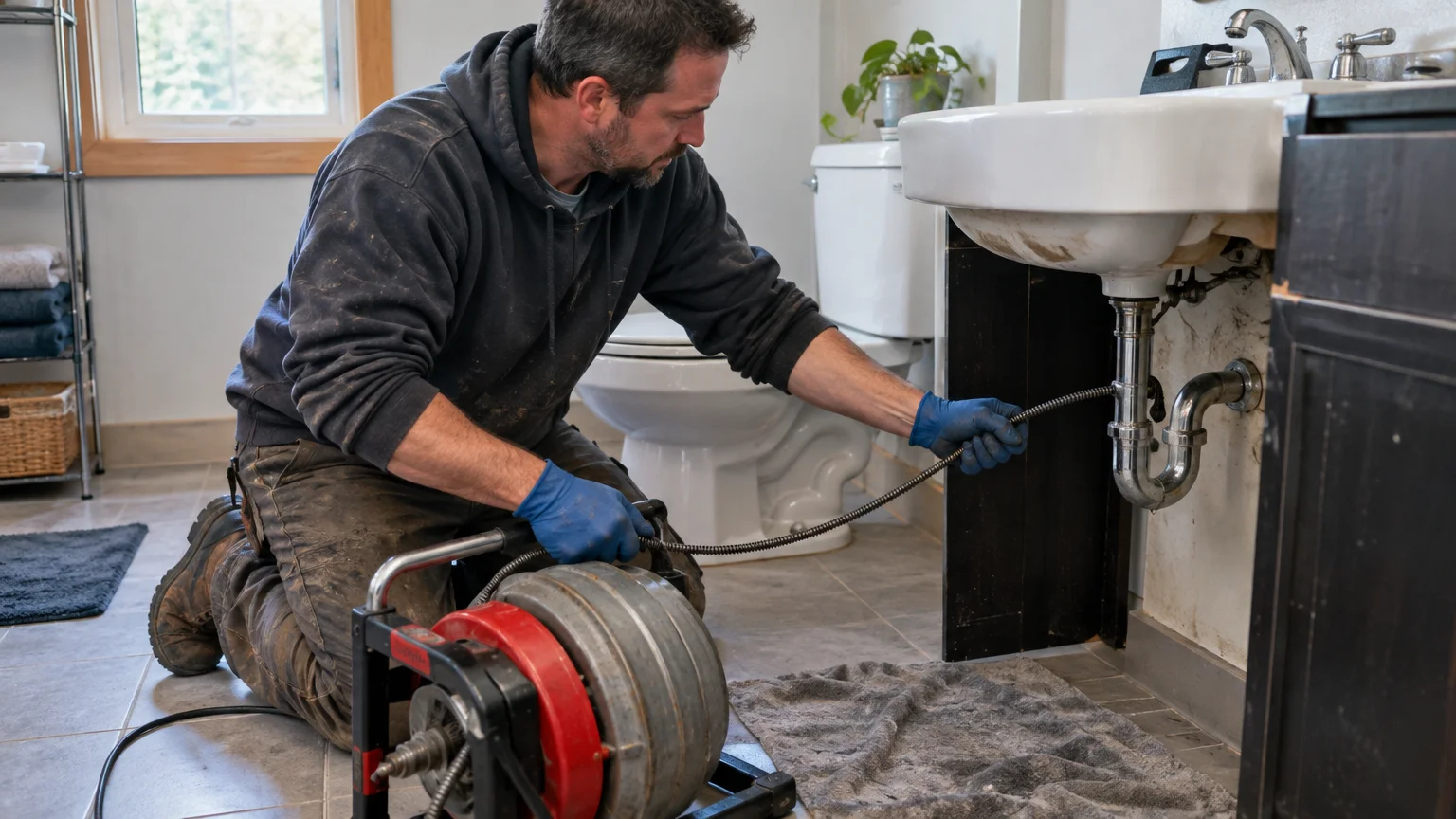
Learning how to use a plumbing snake starts with choosing the right cable for the fixture and clog. Protect the work area, feed the cable slowly, and turn it with care. Stop if resistance feels unsafe. Simple clogs may clear this way, but deep or repeated blockages need a licensed plumber. Millbrae Plumbing can help when home methods do not work.
What is a plumbing snake and when should you use one?
A plumbing snake is a flexible cable that breaks up or removes a clog inside a drainpipe. It moves through the pipe and reaches clogs that a plunger may not clear. A hand snake can help with a small sink, tub, or shower clog near the drain opening.
You do not need a professional for every slow drain. Basic checks, cleaning, and simple upkeep are often safe when one fixture has the problem and no water is leaking. Removing hair from a tub stopper or cleaning a sink strainer can prevent many small clogs.
A plumbing snake may help after a plunger fails and water still sits in the drain. It can also help with soap, hair, or soft buildup. Do not use a regular cable as a first choice for a toilet. It can scratch the bowl or harm the trap. Use a tool made for toilets instead.
Which type of drain snake is right for the blockage?
A small hand auger works well for bathroom sinks, tubs, and showers. A toilet auger has a protected bend that helps it move through the toilet trap. A longer cable may reach farther into a branch drain, but extra length can cause tangles or pipe damage.
Match the tool to the fixture and likely clog. Never force a thin cable through a hard object. If several fixtures drain slowly, the clog may be farther down the line. In that case, Drain Cleaning by a trained plumber is safer than repeated home attempts.
What safety precautions should you take before snaking a drain?
Keep the work area dry and clear before putting the cable into the drain. Gloves and eye protection can help protect you from dirty water and splashes. Set out a bucket, towels, and a small container for debris.
Never use a plumbing snake after pouring chemical drain cleaner into the pipe. The chemical can stay in the water and cause serious burns. Keep your hands away from the cable opening while it turns. Stop work if water backs up from more than one fixture.
How do you use a plumbing snake correctly?
The basic method is simple. Open the drain, place the cable inside, turn it slowly, and pull the clog back or break it apart. Use steady pressure instead of force. Moving too fast can bend the cable, scratch fixtures, or push the clog deeper.
Remove the drain stopper, screen, or strainer first. For a sink, you may need to clean the trap before snaking. The trap is the curved pipe below the sink. It holds water and blocks sewer gases from entering the room. Cleaning it may solve the clog without reaching farther into the pipe.
How do you feed and rotate the cable?
- Place a bucket below the trap or drain opening, then remove standing water.
- Insert the snake several inches into the drain without forcing it.
- Turn the handle clockwise while feeding the cable slowly.
- Pause when the cable meets resistance, then turn it gently against the clog.
- Pull the cable back a short distance, then push it forward again.
- Repeat this motion until the cable moves more freely through the pipe.
The handle should turn smoothly. If it locks, the cable may have reached a hard blockage or pipe bend. Pull back a little to release it. Do not use a drill with a basic hand snake unless the maker says it is safe. Extra speed can harm older pipes.
How do you remove the clog without damaging the pipe?
When the cable catches material, pull it out slowly. The clog may include hair, food, grease, or other waste. Clean the cable after each pass. Several gentle passes are safer than one hard push.
Do not force the cable through a fixed object. Tree roots, broken pipe pieces, and heavy scale need other tools and a closer check. If the pipe is old, weak, or damaged, a professional should inspect it before more pressure is used. Millbrae Plumbing can help property owners choose a safer next step when a simple snake fails.
What should you do after using a plumbing snake?
After the clog seems clear, flush the drain with warm water. The flow should improve without gurgling, rising water, or a foul sewer smell. Clean the drain opening, stopper, and trap before putting them back.
Hot tap water may rinse soft soap and grease from some drains. Boiling water is not safe for every pipe, seal, or fixture. Follow the fixture maker’s advice and never mix cleaners. Regular screen cleaning is a safer way to care for household drains in Millbrae.
How do you flush and test the drain?
Run water for a short time while checking below the sink for leaks. Fill a sink partway, then release the water to test the flow. For a tub or shower, use a small amount of water. The drain should clear without backup or slow pooling.
Check the trap and nearby joints after the work. A loose connection can leak even when the drain flows well. If water appears below the fixture, stop using the fixture and check the connection. Persistent leaks need professional help, especially near cabinets, walls, or electrical equipment.
Why can a drain clog return after snaking?
Snaking may open only a narrow path through the clog. Grease, hair, mineral scale, and soap can stay on the pipe walls. A returning clog may also point to a sagging pipe, poor slope, root growth, or a damaged sewer line.
The pattern can help show where the problem is. One fixture that slows again may have a local blockage. Several fixtures that back up together suggest a deeper drain or sewer issue. Millbrae Plumbing serves Millbrae and nearby communities, including Downtown Millbrae, Millbrae Meadows, Burlingame, San Bruno, Hillsborough, and South San Francisco. The team helps with blocked drains, sewer concerns, and other home or business plumbing needs.
When should you stop using a plumbing snake and call a plumber?
Stop when the cable will not move, comes back damaged, or does not improve the drain. Professional help is also needed when wastewater backs up, several fixtures are affected, or the clog returns soon after cleaning. These signs may point to a deep blockage or damaged pipe.
Emergency Plumbing may be needed when sewage enters the property, a pipe bursts, or water damage spreads. A gas smell is a separate emergency. Leave the area, avoid flames and switches, and contact the gas utility or emergency services as needed. Never use a drain snake to test or repair a gas line.
Which warning signs point to a deeper drain or sewer problem?
The following signs need prompt attention:
- Several sinks, tubs, or toilets drain slowly at the same time.
- Wastewater rises from a floor drain when another fixture runs.
- The drain makes repeated gurgling sounds after cleaning.
- A sewer smell remains after the trap has been cleaned.
- The blockage returns after careful snaking and flushing.
- Wet ground or very green growth appears near a buried sewer line.
A licensed plumber can inspect the line and find the problem area. The work may involve drain cleaning, a camera check, pipe repair, or sewer line work. The right step depends on the pipe condition and blockage location. Plumbing costs also vary by access, damage, urgency, and the work needed, so the final cost is confirmed on a quote.
How can you prevent future blocked drains?
Drain screens can catch hair and food before they enter the pipe. Keep grease, cooking oil, wipes, paper towels, and paint out of household drains. A toilet should receive only waste and toilet paper. These habits help protect homes, rentals, offices, and other properties in Millbrae.
Respond to slow flow early instead of waiting for a full backup. Routine cleaning may help a busy commercial drain, but the schedule should fit the building’s use and pipe condition. Millbrae Plumbing can offer plumbing advice about when professional Drain Cleaning makes more sense than another home attempt.
Frequently Asked Questions
Can a plumbing snake clear every blocked drain?
No. A snake may clear a small, soft clog near one fixture, but it cannot fix every pipe problem. Roots, broken pipes, heavy scale, and deep sewer blockages need other methods. If several fixtures back up or the clog returns, a licensed plumber should inspect the drain.
Should a homeowner use a plumbing snake or a plunger first?
A plunger is usually the safer first tool for a simple fixture clog. It uses pressure without sending a cable into the pipe. If plunging does not restore flow, a properly sized snake may help. Stop if the cable meets hard resistance or causes damage.
Can a plumbing snake damage a pipe?
Yes. Careless use can scratch fixtures, bend the cable, loosen joints, or harm weak pipes. Force and high speed raise the risk. Use a tool made for the fixture and work slowly. Older, fragile, or damaged pipes need professional care before snaking.
Why does a drain clog keep coming back?
A recurring clog may mean that only a small path was opened. Grease, hair, scale, roots, poor pipe slope, or a damaged sewer line can keep causing trouble. Repeated cleaning without finding the cause may delay the right repair. A plumber can check the line and suggest a lasting repair.
Key takeaways
- A plumbing snake works best on a small clog affecting one fixture.
- Feed the cable slowly, with gentle pressure and steady rotation.
- Never use chemical drain cleaner and a plumbing snake together.
- Several slow fixtures or repeated backups may signal a sewer problem.
- Early professional help can limit water and pipe damage.
Conclusion
Learning how to use a plumbing snake can help clear some simple drain clogs safely. The tool cannot repair damaged pipes, root growth, or deep sewer blockages. Careful use, clean drain habits, and early attention can help protect the plumbing system.
Contact us to arrange help from Millbrae Plumbing when a blocked drain will not clear, returns after snaking, or affects more than one fixture.