A water heater making noise may have sediment, loose parts, high pressure, a bad valve, or a heating problem. Popping and crackling often come from mineral buildup in tank units. Hissing may mean water or gas is escaping. The sound, place, and timing show whether safe checks are enough or a plumber should inspect the unit.
Table of Contents
- Why is my water heater making noise?
- What does a popping or crackling water heater sound mean?
- Why is my water heater banging or hammering?
- What causes a hissing noise from a water heater?
- Why is my water heater whining, screeching, or humming?
- Can a noisy water heater be dangerous?
- How can you troubleshoot a noisy water heater safely?
- Does water heater noise mean the unit needs repair or replacement?
- How do tank and tankless water heater noises compare?
- How can a plumber diagnose and fix a noisy water heater?
- Key takeaways
- Frequently Asked Questions
- Conclusion
Why is my water heater making noise?
A water heater may make noise when water, heat, pressure, or parts are not working as they should. Some soft sounds are normal during a heating cycle. Other sounds point to sediment, a loose connection, a leaking valve, or a safety problem. A brief sound during heating is less urgent than a steady sound with water around the unit.
The sound type gives the first clue. Popping often comes from water trapped below sediment in a storage tank. Banging may come from water hammer, loose pipes, or heavy buildup. Hissing may come from a leak, a restricted valve, or gas near a burner. Whining and humming may involve electrical parts or water flow.
Timing also matters. A sound that occurs only while the burner or heating element runs may relate to heating. A sound that continues after the system stops may point to pressure, a valve, or a leak. The location matters too. Noise from the tank, pipes, controls, or burner can suggest different faults.
Homeowners should not remove covers, open gas controls, or work on live wiring. Safe checks can still provide useful details. A water heater repair professional can test the system and explain the next step. Millbrae Plumbing helps property owners review water heater concerns without guessing at the cause.
What does a popping or crackling water heater sound mean?
Popping or crackling usually means sediment has collected inside a storage tank. Sediment is a layer of minerals and dirt that settles at the bottom. When the burner heats the water, trapped water bubbles through this layer. Those bubbles can make popping, snapping, or crackling sounds.
This issue is common in places with hard water. The sound may start softly and grow louder over time. The tank may still supply hot water, so it is easy to ignore. Heavy sediment can make the heater work harder and may shorten the tank’s useful life.
A qualified plumber may flush the tank when the unit and drain valve are fit for that work. Flushing means draining water through the tank to carry out loose sediment. It may not remove hard deposits. An old drain valve may also leak after it opens, so flushing is not always safe for an old or neglected heater.
A homeowner can note when the sound starts and look for water near the base. Do not remove a burner cover or work near a gas flame. If the noise comes with slow heating, rusty water, leaks, or repeated shutdowns, professional water heater repair is safer. The final repair plan depends on tank condition, access, parts, urgency, and damage. The final cost should be confirmed on a written quote.
Why is my water heater banging or hammering?
Banging can come from sediment inside a tank or water hammer in the pipes. Water hammer is a sharp shock that happens when moving water stops fast. It can make pipes strike framing, walls, or nearby supports. Tank rumbling is different because it often comes from hot water moving through sediment.
The sound’s location can help. A deep rumble from the tank during heating may suggest mineral buildup. A sharp bang when a faucet, valve, or appliance closes may suggest water hammer. A repeated knock near a pipe may mean the pipe needs more support. Loose heating parts can also make noise as they expand and shrink.
High water pressure can make pipe noise worse. Pressure is the force that pushes water through the plumbing system. If pressure is too high, valves and fixtures may wear faster. A plumber can test pressure and inspect the heater’s connections, expansion tank, shutoff valve, and nearby pipes.
Homeowners can note which faucet or appliance was running when the sound began. They may also watch whether a pipe moves when a fixture closes. Do not force fittings or valves. A plumber handling water heater repair can separate tank noise from whole-house plumbing noise. This may prevent an unnecessary replacement when the real issue is a valve, pipe support, or pressure problem.
What causes a hissing noise from a water heater?
A hissing sound may come from water escaping through a small opening or from restricted water flow. It may also come from a temperature and pressure relief valve, a loose connection, or a tank leak. The exact location matters. A hiss near the burner or gas control needs prompt attention.
A temperature and pressure relief valve is a safety valve. It opens when heat or pressure becomes unsafe. It may release water through a discharge pipe. Never cap, block, or remove this pipe. A valve that keeps releasing water needs inspection because pressure, overheating, or a bad valve may be the cause.
Gas water heaters need extra care. If you smell rotten eggs, hear gas near the unit, or suspect a gas leak, leave the building. Contact the gas utility or emergency services from a safe place. Do not use a switch, flame, phone, or appliance inside the suspected area. Qualified professionals should handle the heater.
A hissing sound from an electric heater may come from a leaking fitting or a heating element problem. Water near electrical parts creates a shock risk. Do not touch wet equipment. Emergency Plumbing may be needed when a leak is active, spreading, or damaging walls and floors.
Why is my water heater whining, screeching, or humming?
Whining, screeching, or humming may come from a heating element, valve, pump, or narrow water path. Electric water heaters can make noise when an element has mineral buildup. A partly closed valve can also create a high sound as water passes through a small opening.
A low hum may come from normal electrical work, vibration, or a nearby pump. The sound is more concerning when it is new, loud, or paired with weak hot water. Screeching can point to restricted flow or a failing part. A qualified plumber can check the element, thermostat, wiring, valves, and tank.
Homeowners should not remove an electrical access panel. Turning off a breaker does not prove that every part is safe to touch. Water and electricity create a serious hazard. A safe check is visual: look for leaks, moisture, scorching, damaged insulation, or a tripped breaker without opening the unit.
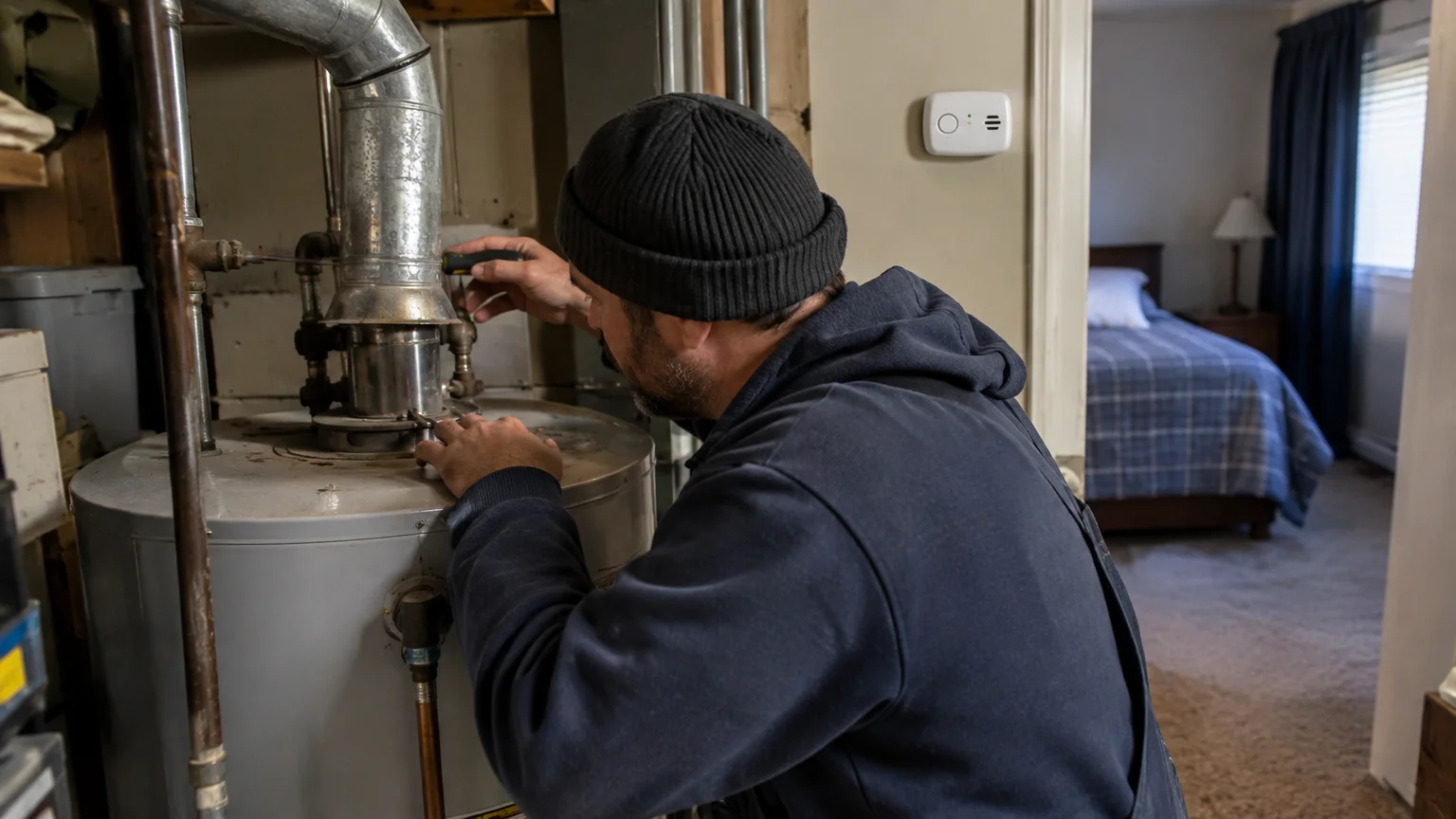
Gas units may whistle or hum when a burner, vent, or gas control has a problem. Poor venting can create carbon monoxide risk. Carbon monoxide is a colorless gas with no smell. It can cause severe illness or death. A working carbon monoxide alarm near sleeping areas adds protection but does not replace an inspection.
Can a noisy water heater be dangerous?
Some water heater sounds are harmless. Noise with gas odor, smoke, leaking water, burning smells, or a faulty relief valve can be dangerous. Main risks include gas exposure, carbon monoxide, electric shock, scalding water, pressure release, and water damage. Quick action matters when a warning sign appears.
Leave the area when gas may be escaping. Do not use switches or flames near a suspected gas leak. If an alarm sounds, move everyone outside. Contact emergency services from a safe place. A heater that produces smoke or a strong burning smell needs immediate attention.
Water can cause damage even when the heater still works. A puddle below the tank, wet insulation, or water spraying from a connection should not be ignored. The main water shutoff may limit damage if it can be reached safely. Turn off gas or electricity only when this can be done without entering danger.
Scalding is another concern. Water that suddenly becomes much hotter can burn skin quickly. Children, older adults, and people with limited movement may face greater risk. Until the cause is known, avoid unusually hot water and arrange a qualified inspection.
How can you troubleshoot a noisy water heater safely?
Homeowners can watch the unit, record when the sound happens, and look for visible leaks. They should not open sealed gas controls, remove electrical covers, drain an old tank without guidance, or adjust safety devices. Simple observations often give a plumber better information without creating a new hazard.
A safe check can include these steps:
- Note whether the noise happens during heating, after a fixture closes, or all the time.
- Look for water around the base, valves, pipes, and discharge line.
- Check whether hot water is weak, too hot, rusty, or discolored.
- Listen from a safe distance and locate the tank, pipes, or controls involved.
- Check for gas odor, smoke, burning smells, or a carbon monoxide alarm.
- Keep children away from the equipment until the problem is checked.
A homeowner may clean the outside of the unit and keep the area clear. The space should allow safe access. Do not store paint, paper, chemicals, or other flammable items nearby. Never block vents or place items over the heater.
A qualified plumber should handle gas tests, electrical tests, relief valve work, tank flushing on a fragile unit, burner service, and internal repairs. Household smell checks do not replace professional gas testing. If gas is suspected, leaving the building comes first.
Does water heater noise mean the unit needs repair or replacement?
Noise does not always mean a water heater needs replacement. Repair may make sense when the tank is sound and the issue involves a valve, thermostat, heating element, loose connection, or moving pipe. Replacement may be safer when the tank leaks, corrosion is widespread, or several major parts are failing.
The unit’s age is only one factor. A newer heater with one failed part may be repairable. An older tank with leaks, poor heating, and heavy sediment may have little repair value. The plumber should inspect the tank, controls, connections, venting, and safety parts before giving advice.
Replacement also depends on the property’s needs. Household size, hot water use, fuel type, space, venting, and electrical service all matter. A larger home or business may need a different capacity. A tankless system may fit some properties, but it can require changes to gas supply, wiring, venting, or water lines.
The final cost depends on parts, unit size, access, damage, urgency, and installation changes. A valve repair is usually less involved than replacing a failed tank. A written quote should confirm the full work before it begins. Millbrae Plumbing can help Millbrae homeowners and property managers compare water heater repair and water heater replacement options based on the system’s condition.
How do tank and tankless water heater noises compare?
Storage-tank water heaters often make popping, rumbling, or crackling sounds because they hold and heat a large amount of water. Sediment collects at the bottom and can trap water near the burner or heating element. Tankless units do not store the same amount of water. Their sounds often come from fans, pumps, burners, valves, or restricted flow.
A tankless unit may hum during normal operation. A soft fan sound may happen while the system moves heat outside. Whistling, loud vibration, repeated ignition attempts, or a sudden sound change may point to scale, poor flow, a sensor issue, or vent trouble. Scale is a hard mineral layer that forms inside water passages and heat exchangers.
Tankless systems need the right flow rate and fuel or electrical supply. If several fixtures run at once, the unit may struggle when it was not sized for that demand. A qualified technician can check filters, inlet screens, valves, venting, temperature settings, and error codes.
Homeowners should not attempt a tankless water heater installation without the right skills and permits. Tankless installation may involve gas, electrical, venting, combustion, and water connections. Professional Water Heater Installation helps confirm that the selected unit fits the building and local rules.
How can a plumber diagnose and fix a noisy water heater?
A plumber starts by asking when the noise occurs and what changed before it began. The inspection may include the tank, burner or elements, valves, pipes, controls, venting, water pressure, and signs of leaks. Testing helps separate a water heater issue from a wider plumbing problem.
The plumber may listen during a heating cycle and operate nearby fixtures. The professional may test pressure, inspect the relief valve discharge, check electrical parts, review error codes, and assess the tank. Gas equipment may need safe combustion and leak checks. The exact steps depend on the heater type and reported sound.
Possible repairs include sediment service, valve replacement, element or thermostat repair, pipe support, pressure correction, relief valve service, or leak repair. Some faults require replacement. A tank that leaks through its body cannot usually be repaired like a faulty outside valve.
Property owners should compare local plumbing professionals with experience in tank and tankless systems. The plumber should explain the cause, safety concerns, repair choices, and service limits in plain language. Reviews may help, but the inspection should guide the final choice. Millbrae Plumbing serves property owners and can help identify a safe next step.
Key takeaways
- Popping and crackling often point to sediment inside a storage tank.
- Banging may come from tank buildup, water hammer, loose pipes, or pressure.
- Hissing near gas equipment should be treated as a possible safety issue.
- Whining and humming may involve valves, heating elements, wiring, or restricted flow.
- A plumber should handle gas, electrical, pressure, relief valve, and internal tank work.
Frequently Asked Questions
Is it normal for a water heater to make noise?
Some soft sounds are normal during heating. A tank may click as parts expand, while a tankless unit may hum as its fan or controls run. Loud, new, repeated, or worsening sounds are not normal enough to ignore. Noise with leaks, gas odor, smoke, or poor hot water needs prompt professional attention.
Can sediment make a water heater sound loud?
Yes. Sediment can settle at the bottom of a storage tank. Heated water becomes trapped below the mineral layer and escapes in bubbles. These bubbles create popping, crackling, or rumbling sounds. A plumber can decide whether flushing is suitable or whether buildup and tank wear make another repair more practical.
Should a homeowner flush a noisy water heater?
Not always. Flushing may help a newer unit with loose sediment, but an old tank or weak drain valve can leak after service. Gas and electric hazards also make careless work unsafe. A homeowner can ask a plumber to inspect the unit first and explain whether flushing is suitable.
What should someone do if a water heater hisses?
Find the sound only from a safe distance and look for visible water. A hiss near a gas burner, gas control, or suspected leak requires leaving the building. Contact the gas utility or emergency services from outside. Do not touch wet electrical equipment.
When should a noisy water heater be replaced?
Replacement may be better when the tank leaks, corrosion is widespread, hot water remains unreliable, or several major parts are failing. A single valve, thermostat, or element problem may support repair. A qualified plumber should inspect the system and compare its condition with the property’s hot water needs.
Conclusion
A water heater making noise should not be judged by sound alone. Popping may point to sediment, banging may involve pressure or moving pipes, and hissing may signal a leak or serious gas concern. Safe observation can help, but internal, gas, electrical, and pressure work belongs to a qualified plumber.
Contact us to arrange professional water heater help for a home or business in Millbrae. Millbrae Plumbing can inspect the system, explain the findings, and help the property owner choose a suitable repair or replacement path.